*This post may contain affiliate links for which I earn commissions.*
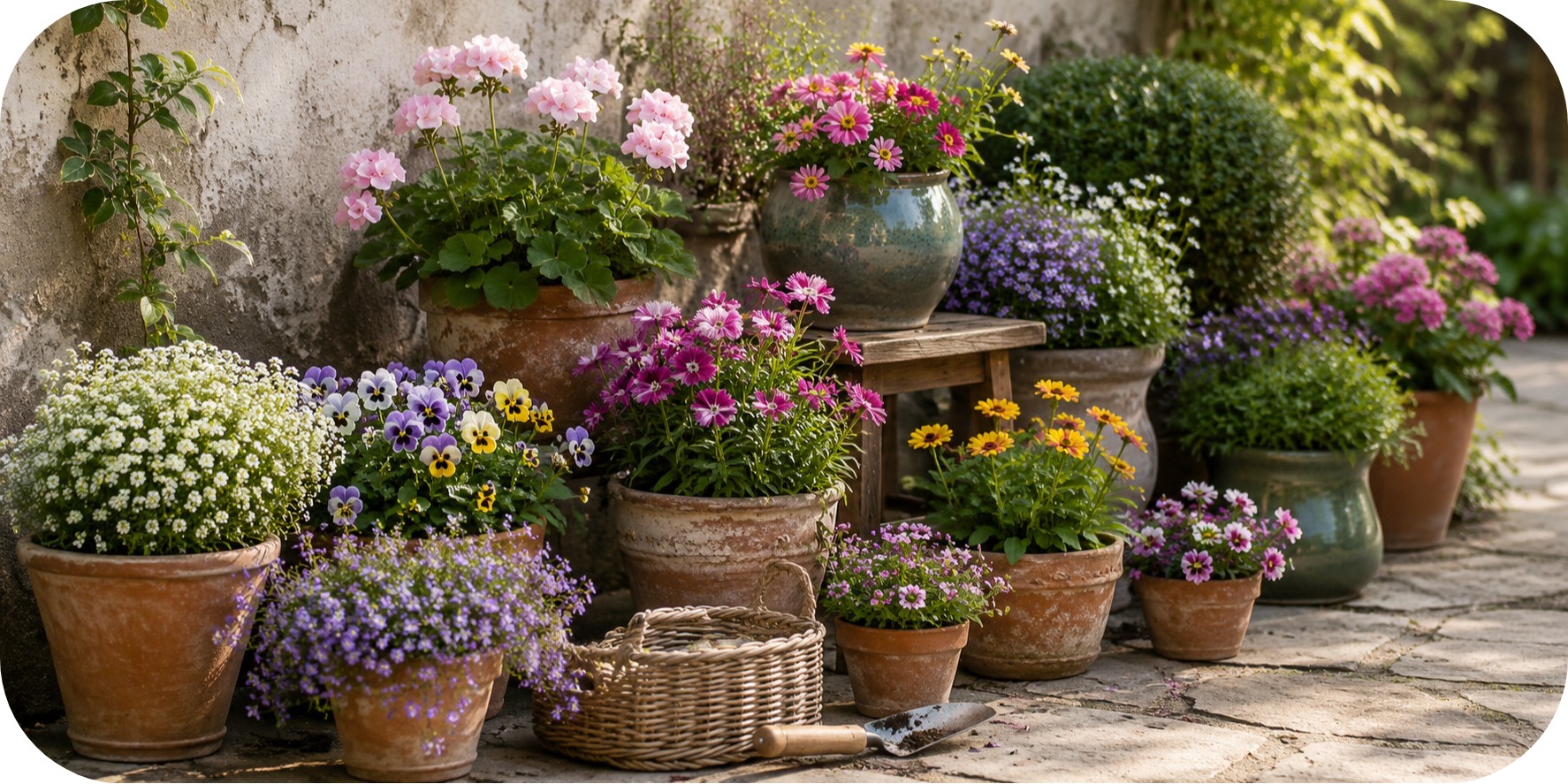
Small pots don’t have to mean small displays. Choose flowers that naturally stay compact or spill gracefully over the edges, and even a collection of modest containers can bring plenty of color to a patio, balcony, or porch.
The Mood + Palette
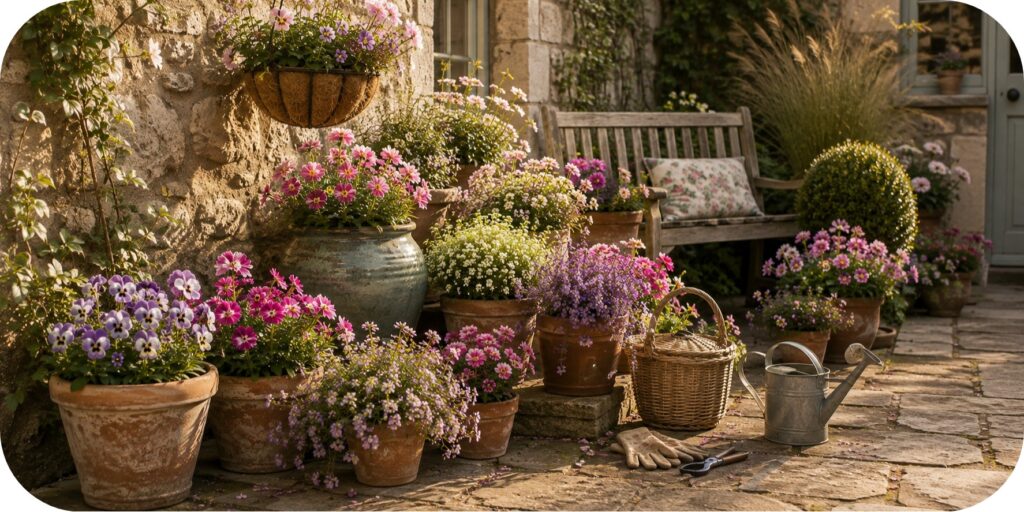
For small-pot flowers, the prettiest arrangements often feel loose and garden-like rather than overly planned. Soft pinks, lavender, creamy whites, cheerful yellows, and touches of deeper purple look especially lovely against weathered terracotta and simple glazed ceramic.
Mix rounded flowers with delicate blooms and trailing varieties so the containers have different shapes and textures. A few pots grouped at different heights can feel much more abundant than the same containers lined up in a row.
Natural morning or late-afternoon light brings out the colors without making them harsh, while weathered clay and slightly imperfect foliage keep everything relaxed and believable.
Why this works: Flowers with compact or trailing growth habits can create a surprisingly full display without needing oversized containers.
Looks to Try
Calibrachoa for Cascading Color
Calibrachoa produces masses of small, petunia-like flowers and looks especially pretty spilling over the edge of a pot. Give it plenty of sun and use a container with good drainage so the roots aren’t sitting in soggy soil.
Sweet Alyssum for Soft Edges
Tiny clusters of sweet alyssum can soften the edge of a small container with clouds of white, pink, or purple flowers. Its low, gently spreading habit also makes it a lovely companion around a slightly taller centerpiece plant.
Pansies for Cool-Season Pots
Pansies bring a surprising amount of color to relatively small containers, particularly during cooler weather. Their cheerful faces work beautifully in simple terracotta pots, and grouping several pots together can create a much fuller display.
Lobelia for Delicate Trailing Flowers
Lobelia has fine foliage and masses of small flowers that tumble naturally over container edges. Blue and violet varieties can be especially striking beside white flowers or warm terracotta.
Dwarf Marigolds for Sunny Spots
Compact marigolds are an easy way to bring warm yellow and orange tones into a sunny small-space garden. Look for dwarf varieties that stay naturally neat rather than choosing taller types that can quickly overwhelm a little pot.
Dianthus for Pretty, Compact Blooms
Dianthus works beautifully in small containers thanks to its tidy growth and delicate flowers. Pink, white, and deeper rose varieties look particularly charming in aged clay pots, and many have a light fragrance when you’re close enough to notice it.
Dwarf Zinnias for Summer Color
Compact zinnia varieties give you those wonderfully bright summer flowers without requiring a large garden bed. Choose dwarf forms suited to containers and give them a sunny position where they can flower generously.
Nasturtiums for Flowers That Spill
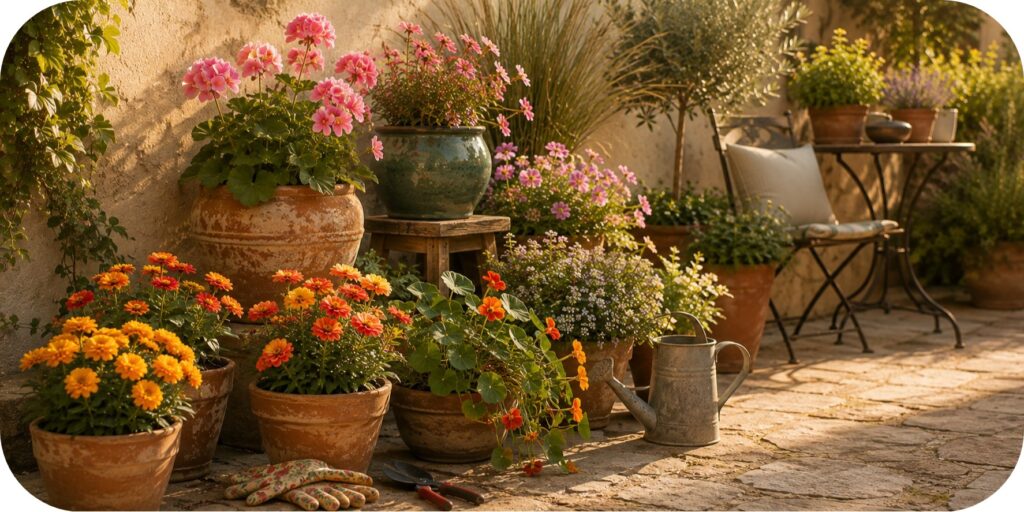
Nasturtiums bring rounded leaves and vivid flowers to small containers, with some varieties trailing naturally over the sides. I especially like the slightly unruly way they grow because they can make a simple pot feel much more established.
Compact Geraniums for Long-Lasting Color
Compact geraniums can provide strong blocks of pink, red, coral, or white while keeping a relatively manageable shape. They’re particularly useful when you want one small pot to have enough presence to stand on its own.
Quick Finds to Match This Look
When choosing small terracotta pots, look for containers with drainage holes and enough depth for the particular flower rather than selecting the tiniest pot available.
For glazed ceramic pots, simple shapes and restrained colors allow the flowers to remain the main attraction. A few complementary finishes usually look more natural than a collection of completely unrelated colors.
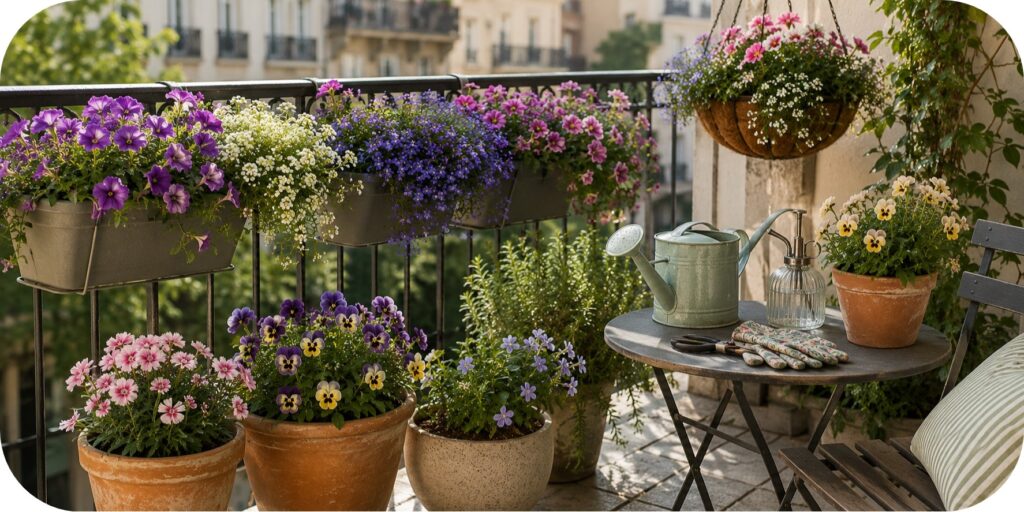
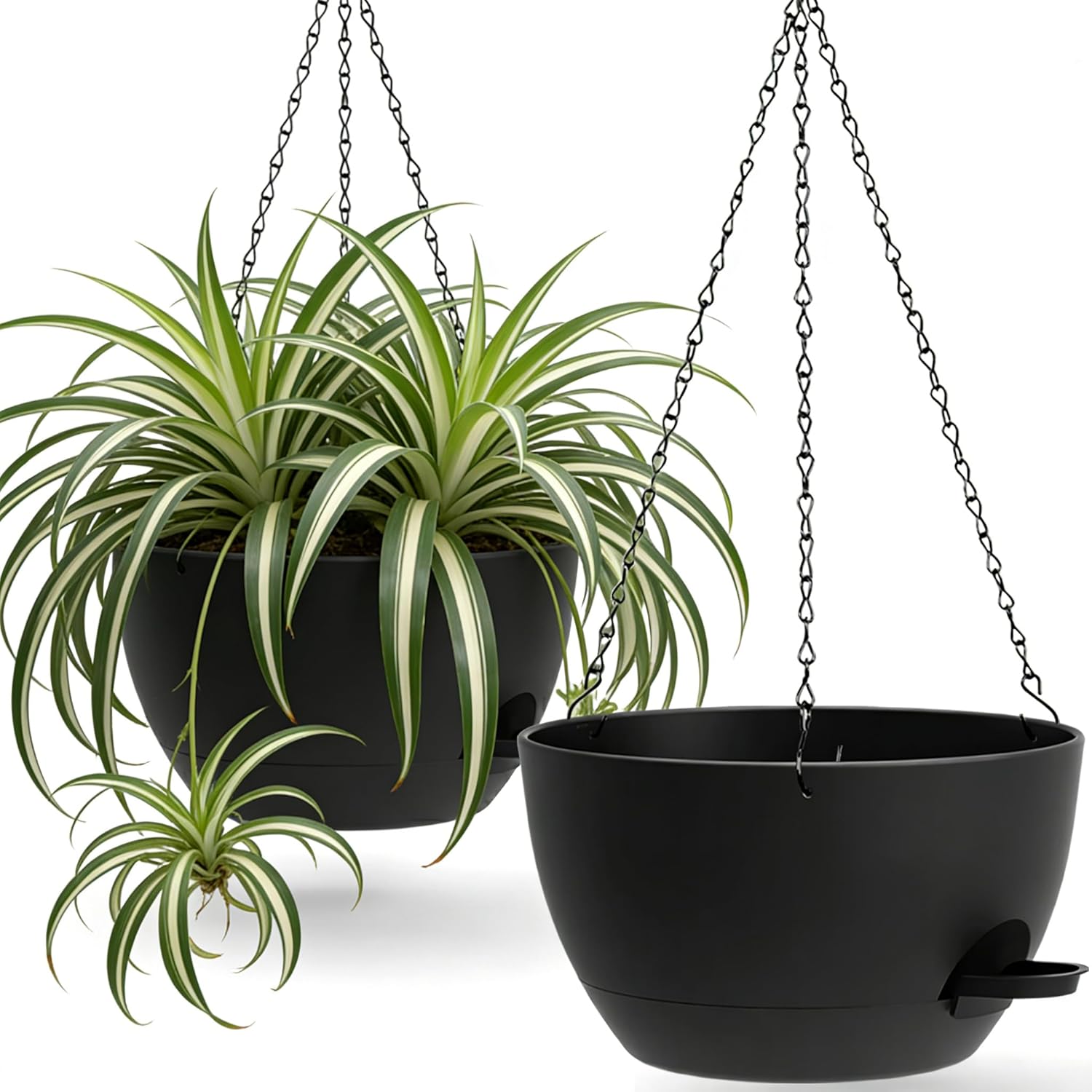
Hanging planters work particularly well with trailing flowers such as calibrachoa and lobelia. Choose a size that provides adequate root space and has reliable drainage.
Product Suggestions
Click Image To View

Click Image To View

Click Image To View
Make It Feel Intentional
Repeating one flower color across several pots can make a collection feel connected even when the containers themselves don’t match. You might carry a little lavender or white through three different arrangements rather than making every pot completely different.
Varying the height of your containers also makes a noticeable difference. Place a pot on a low stool or plant stand, leave another directly on the paving, and allow a trailing flower to create the lowest layer.
Pay attention to foliage as well as flowers. Fine leaves, rounded leaves, and trailing greenery provide texture between blooms and help the display remain attractive when individual flowers fade.
Deadheading, which simply means removing spent flowers, can help many flowering plants keep looking tidy and encourage additional blooms. A small pair of pruning shears kept nearby makes this an easy little job.
Most importantly, give each flower the light and growing conditions it actually needs. A beautiful arrangement won’t stay beautiful for long if a sun-loving flower spends its days tucked into deep shade.
Pieces That Pull It Together
Small terracotta pots are a natural choice for compact flowering plants. Look for drainage holes, sturdy clay, and enough depth for healthy roots rather than choosing containers purely because they’re tiny. Their warm, weathered finish works beautifully with colorful flowers.
Glazed ceramic pots introduce subtle color and contrast among simpler containers. Choose manageable sizes with drainage and consider repeating one glaze color across several pots for a more cohesive garden feel.
Hanging planters create another growing level without using valuable floor space. Look for secure hanging hardware, sufficient planting depth, and good drainage, particularly when growing flowers with cascading habits.
Railing planters can turn an otherwise unused edge into valuable growing space. Choose secure containers appropriately sized for your railing and deep enough for the flowers you intend to grow.
Potting mix gives container flowers the lighter, well-draining growing environment they need. Choose a mix intended for containers rather than filling small pots with heavy garden soil.
Slow-release flower fertilizer can provide nutrients gradually throughout the growing period. Look for a product suitable for flowering container plants and always follow the application directions for the particular product you choose.
Compact watering cans are much easier to maneuver around a collection of little pots than large garden cans. A narrow or controlled spout also helps direct water toward the soil instead of soaking delicate flowers.
Pruning shears are useful for deadheading and tidying flowering plants as the season progresses. A small, comfortable pair is usually all you need for the light pruning involved with container flowers.
Product Suggestions

Click Image To View

Click Image To View

Click Image To View
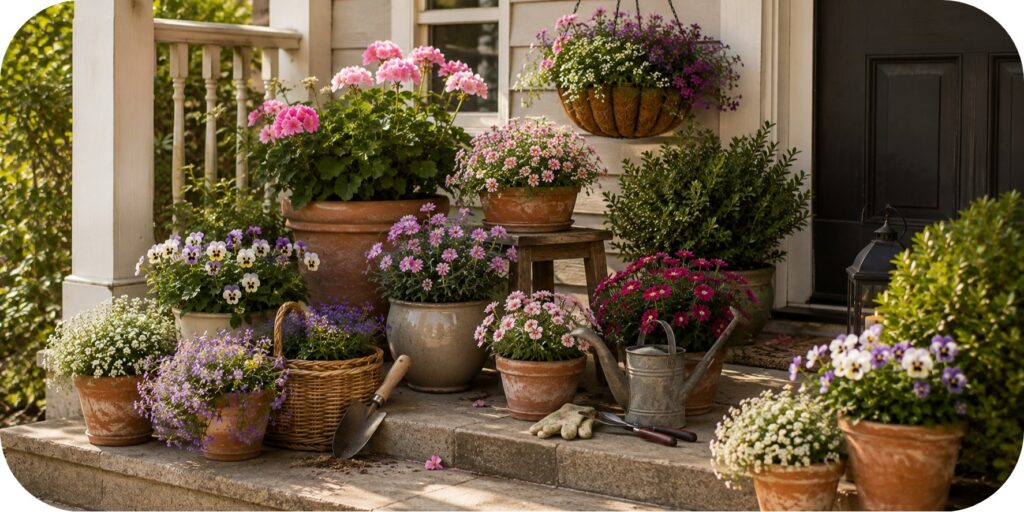
Choose one or two flowers that suit the amount of sunlight your space receives and start with just a few pots. Once you see how beautifully those first containers grow, you can gradually add more color wherever your little garden has room for it.