
*This post may contain affiliate links for which I earn commissions.*
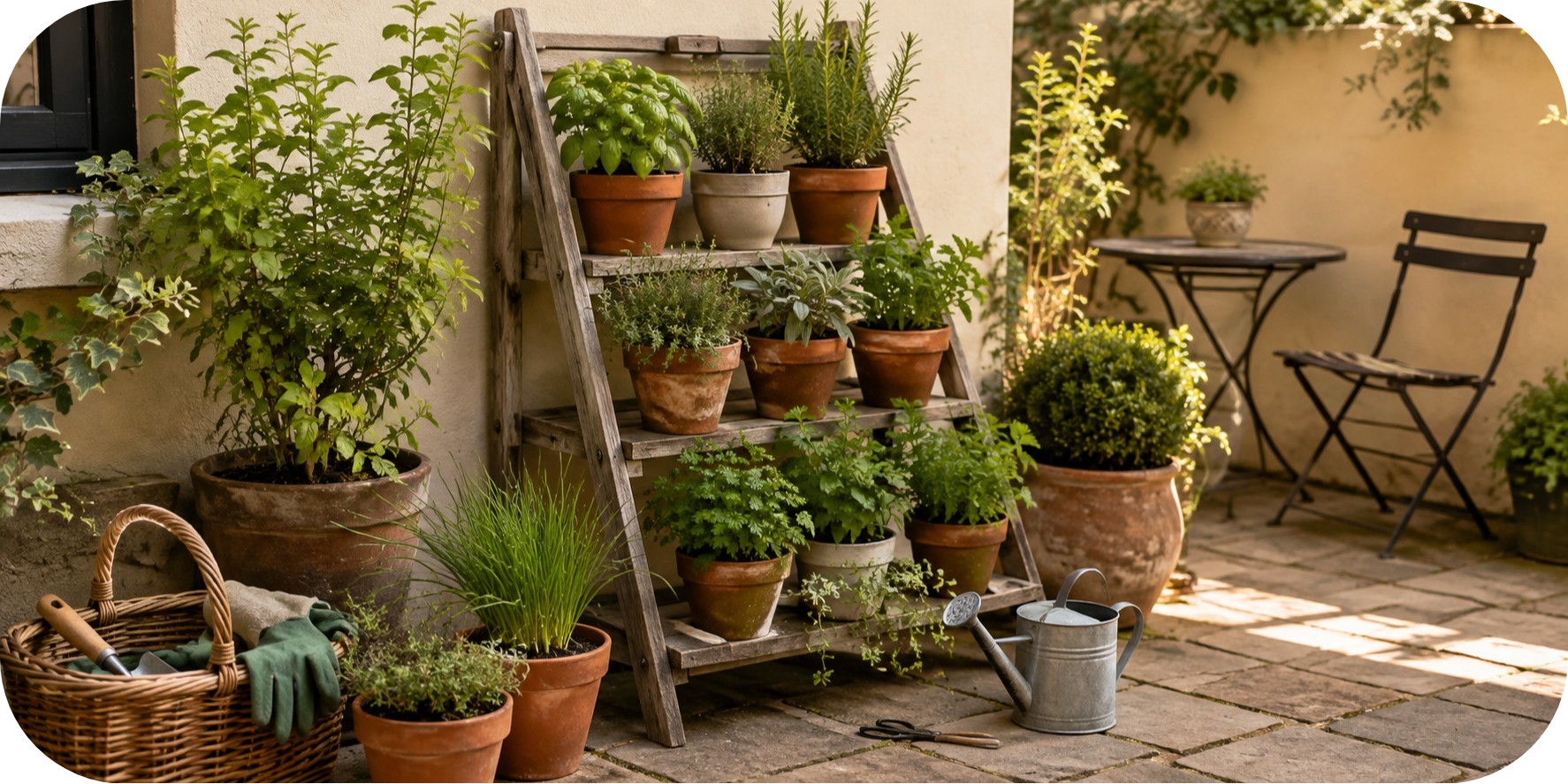
A vertical herb garden is one of the simplest ways to grow fresh herbs when you don’t have much room at ground level. With the right vertical planter, a handful of small terracotta pots, and a few basic gardening supplies, you can create a productive little herb garden on a patio, balcony, porch, or beside a sunny wall.
The key is keeping the setup manageable. Choose herbs you actually use, give them the light and drainage they need, and arrange everything so watering and harvesting are easy.
The Tools That Make This Easy
The most important product is your vertical planter. For a patio or balcony, look for a sturdy freestanding design with planting pockets or individual containers deep enough to give herb roots room to grow. A stable base is especially important once the planter is filled with damp soil.
If floor space is particularly limited, wall-mounted planters can turn an otherwise unused wall into growing space. Look for good drainage, secure mounting hardware, and enough separation between containers to prevent the upper herbs from shading everything below.
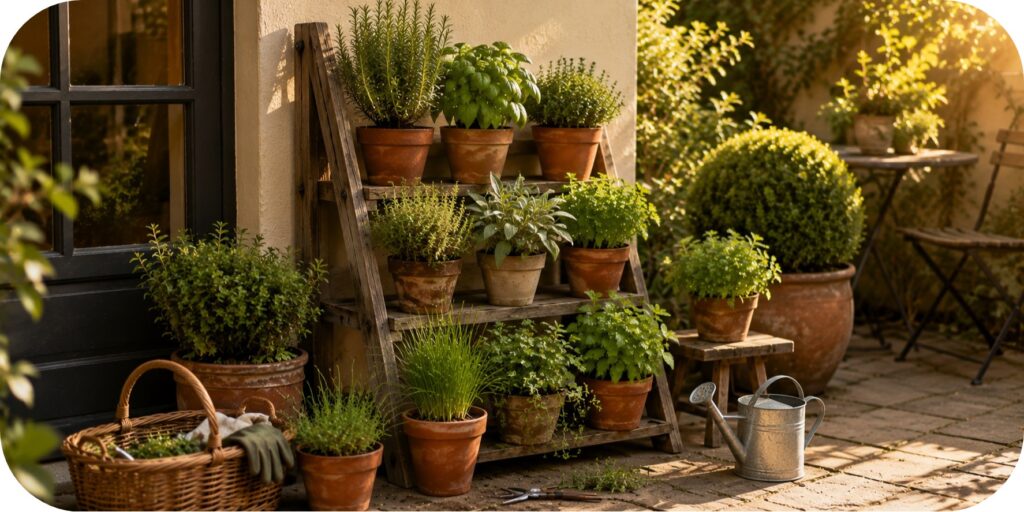
A wooden plant ladder is another useful option and gives the garden a softer, more traditional appearance. Because you’re using separate containers, you can rearrange the herbs as they grow or move individual plants into better light.
For a plant ladder, small terracotta pots are a particularly nice choice. Terracotta has a natural garden look and allows moisture to evaporate through the clay, which can be useful for herbs that don’t like constantly wet soil. Look for pots with drainage holes and enough depth for the particular herbs you’re growing.
Fill the containers with herb potting mix or a quality container mix. Avoid filling pots with ordinary garden soil, which can become dense and poorly drained inside containers.
You’ll also want a compact watering can, preferably with a narrow spout. It makes reaching individual pots much easier when several herbs are positioned one above another.
A good pair of pruning shears makes harvesting and trimming herbs cleaner and easier, particularly once rosemary, thyme, and other woody herbs become established. A pair of gardening gloves rounds out the basic setup and is useful when you’re planting, repotting, or tidying the garden.
Product Suggestions

Click Image To View

Click Image To View

Click Image To View
Do This First
Before buying your vertical planter, decide exactly where the garden will go. Watch the area during the day and note how many hours of direct sunlight it actually receives. That will help you choose both the right herbs and the best style of planter.
Measure the available width and height as well. A slim vertical planter or plant ladder that comfortably fits the space will look much better than an oversized unit squeezed against a wall or railing.
If you’re considering wall-mounted planters, check the surface before purchasing them. The mounting method needs to be appropriate for the wall and capable of supporting the weight of the planters after they’re filled with damp potting mix and mature plants.
Also consider where excess water will drain. This matters particularly on balconies and porches, where water dripping from upper containers could land on furniture, flooring, or the space below.
Step-by-Step
Choose the Right Vertical Planter
Start with the structure that best suits your available space.
A freestanding vertical planter is a practical choice when you want one self-contained growing system. A wooden plant ladder with terracotta pots gives you more flexibility because every herb remains in its own movable container. Wall-mounted planters are especially useful when preserving floor space is the priority.
Whichever style you choose, make sure it’s sturdy, appropriately sized for your space, and designed to handle the weight of wet soil and plants.
Choose Herbs You’ll Actually Use
There’s no need to fill every available container with a different herb. Start with a manageable selection such as basil, parsley, thyme, rosemary, chives, or mint, depending on your growing conditions and what you like to cook with.
Check the light and moisture requirements of each herb before deciding where it belongs.
Arrange the Herbs Before Planting
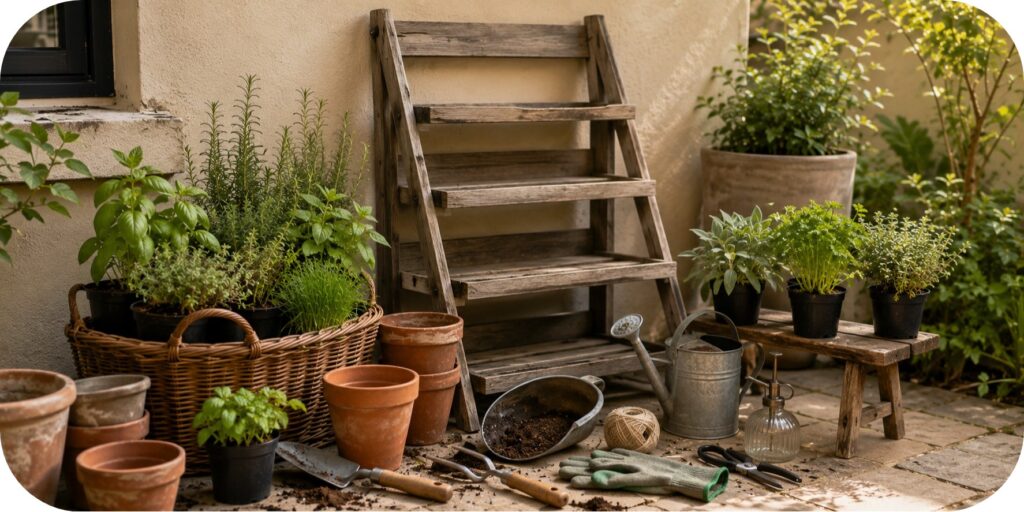
Put your empty terracotta pots or planter containers into position first. This lets you experiment with the arrangement before everything becomes heavy.
Place taller herbs where they won’t unnecessarily shade smaller plants. Herbs you harvest frequently are best positioned somewhere comfortable to reach rather than at the very top.
If you’re using individual pots, vary their positions slightly rather than creating a rigid arrangement. It will make the finished herb garden feel much more natural.
Prepare the Pots
Check that every container has drainage holes before filling it.
Add fresh herb potting mix, leaving a little space between the soil surface and the rim. This makes watering easier and helps prevent potting mix from washing over the sides.
Don’t compress the potting mix too firmly. Herb roots need both moisture and air.
Plant the Herbs
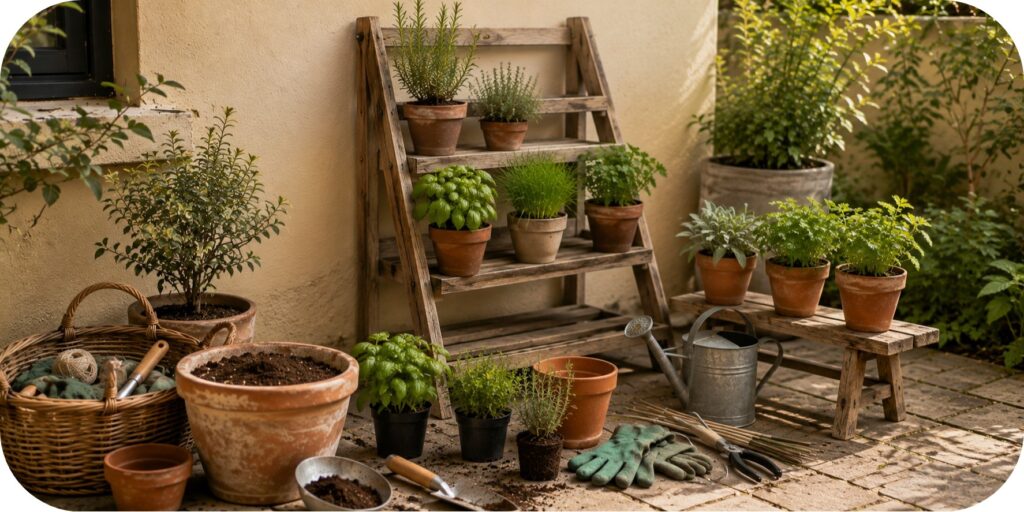
Carefully remove each herb from its nursery pot and gently loosen any roots that are tightly circling the root ball.
Place the herb into its new container at approximately the same depth it was previously growing. Fill around it with additional potting mix and lightly firm the surface.
I find this is the point where a collection of pots suddenly starts looking like a proper little garden.
Water With a Narrow-Spout Watering Can
Give each newly planted herb a thorough drink using your compact watering can. A narrow spout is especially helpful in a vertical garden because you can direct water toward the soil without pouring it over the herbs growing underneath.
Water until excess moisture begins draining from the bottom of each container.
Don’t assume every level of your vertical garden will need watering at the same time. Upper containers may receive more sun and wind and can dry considerably faster.
Let the Herbs Settle In
Watch the garden closely during its first week. Check the potting mix with your finger before watering and notice which containers dry fastest.
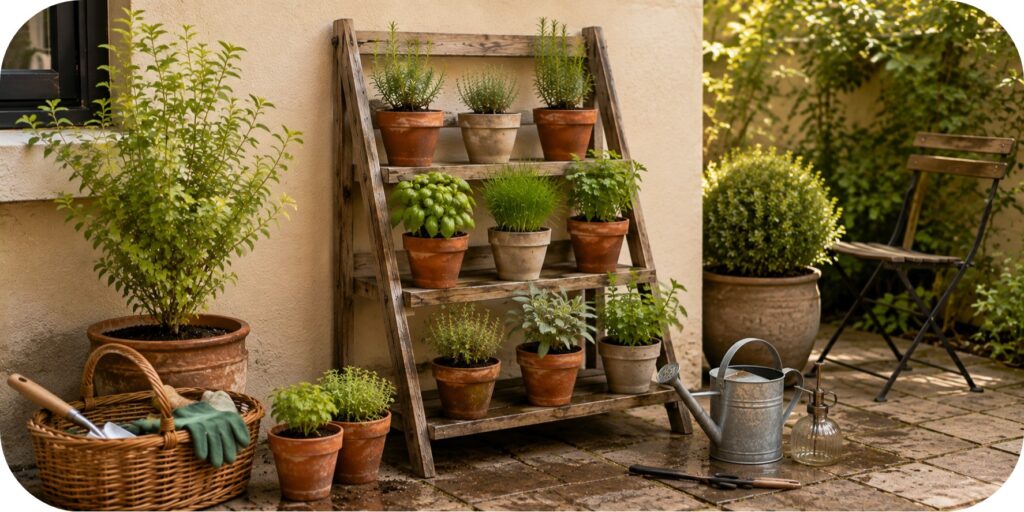
If a particular herb seems unhappy, one advantage of using individual terracotta pots on a plant ladder is that you can simply move it to another level.
Harvest With Pruning Shears
Once your herbs are established and actively growing, harvest them regularly.
Keep your pruning shears somewhere convenient so taking a few sprigs for dinner becomes part of using the garden rather than a separate gardening chore. Clean cuts are particularly useful when harvesting woody herbs.
Why this works: A vertical growing system lets you fit several productive containers into the footprint normally occupied by only one or two pots, while keeping your herbs accessible for watering and harvesting.
Quick Fixes if Something Goes Wrong
If the upper herbs continually dry before the lower ones, don’t water the entire vertical garden according to one schedule. Check each pot individually and use your narrow-spout watering can to give moisture only where it’s needed.
If lower plants begin stretching toward the light, they’re probably being shaded by the herbs above. Rearrange the individual pots or trim back some of the upper growth.
If the soil remains soggy, check the container’s drainage holes and make sure you’re using a free-draining container or herb potting mix rather than heavy garden soil.
If your vertical structure feels unstable, address it immediately. A freestanding planter may need a more secure position, while wall-mounted planters should have mounting hardware suitable for both the wall and the fully loaded weight.
If the herbs start crowding one another, move individual pots farther apart or harvest them more frequently. This is another reason I particularly like modular vertical systems for small gardens.
Product Suggestions

Click Image To View

Click Image To View

Click Image To View
Make It Your Own
For a warm, traditional garden look, pair a wooden plant ladder with weathered terracotta pots. Rosemary, thyme, sage, parsley, and chives provide enough variation in foliage to make the arrangement attractive without adding much decoration.
For something more streamlined, choose a freestanding vertical planter with coordinated containers. Keeping the structure simple allows the different shades and textures of the herbs to become the visual focus.
On an especially tiny balcony, wall-mounted planters can be the better solution. They move the herb garden almost entirely off the floor, leaving precious space available for a chair, small table, or simply room to move around.
You can also combine systems. A small wall planter for frequently used herbs paired with two or three terracotta pots below can provide plenty of growing space without covering an entire wall.
A Quick Next Step
Start by measuring the space and deciding which of the three main growing systems suits it best: a freestanding vertical planter, wall-mounted planters, or a wooden plant ladder with individual pots.
Once the structure is chosen, the remaining supplies are simple: small terracotta pots where needed, herb potting mix, a compact watering can, pruning shears, and gardening gloves.
You don’t need to fill every level on the first day. Start with a few herbs you genuinely use, learn how quickly their containers dry in your particular space, and add more as your vertical herb garden begins to grow.