*This post may contain affiliate links for which I earn commissions.*
A few pots of leafy greens, a tomato plant catching the morning sun, and fresh herbs tucked into the gaps can be enough to make a small outdoor space feel surprisingly productive. You don’t need neat rows of raised beds or a large backyard to start growing vegetables. A handful of well-chosen containers can give you a little garden that’s manageable, useful, and lovely to look at.
The Design Direction
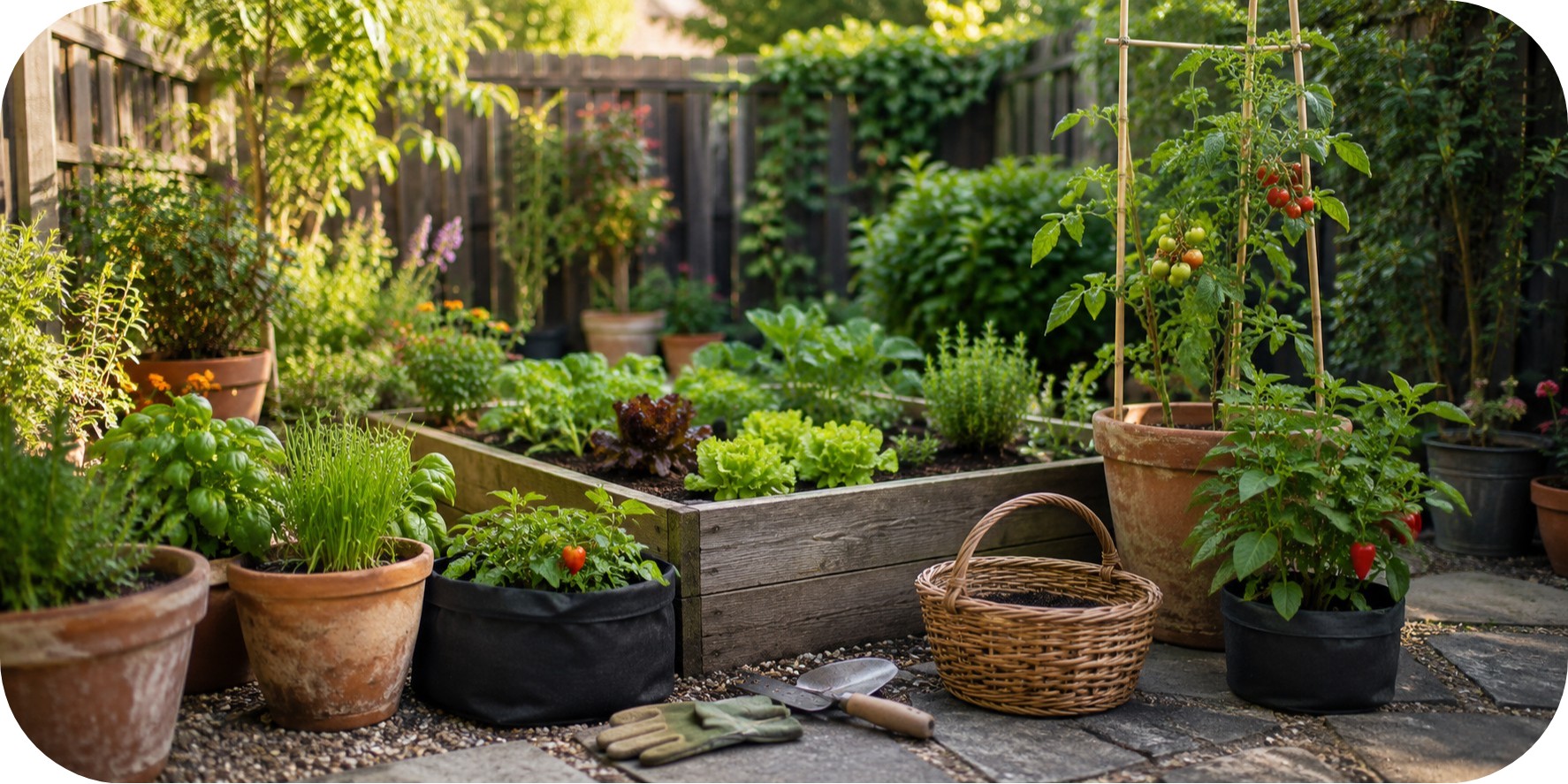
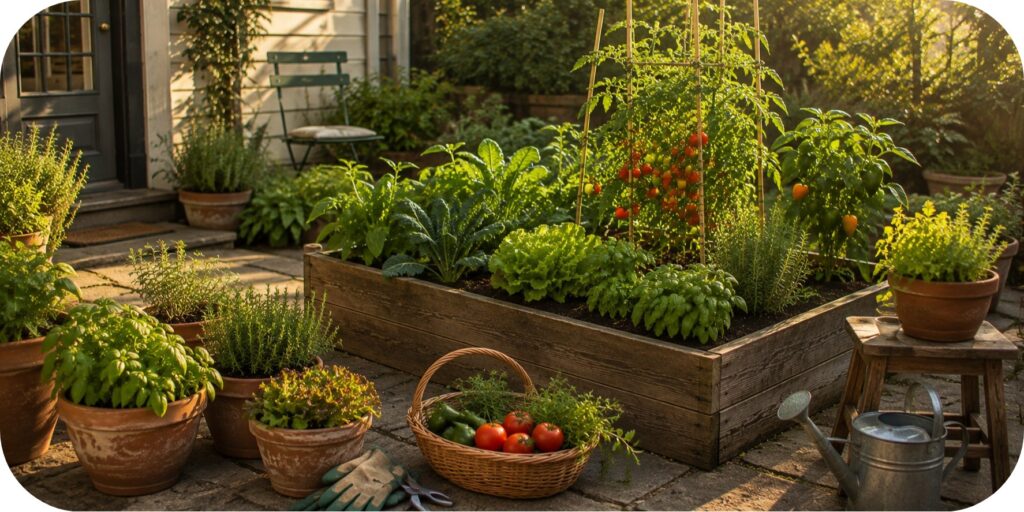
For a beginner vegetable garden, I’d keep the overall look relaxed and practical, with plenty of fresh green foliage against warm terracotta, weathered wood, woven baskets, and natural stone. Large containers and raised planters provide the structure, while smaller pots of herbs and leafy greens soften the edges.
Let the vegetables themselves provide most of the color. Deep green kale, feathery carrot tops, bright lettuce leaves, glossy peppers, and ripening tomatoes create plenty of visual interest without needing much decoration.
Simple shapes work particularly well in a small space. Rectangular raised planters can sit neatly against a wall, while round pots and fabric grow bags fill awkward corners without making everything feel rigid.
Keep some visible paving or open ground between your growing areas. A productive garden can still feel calm and inviting when every available inch isn’t filled.
Morning or late-afternoon sunlight brings out the textures beautifully, especially against weathered terracotta and timber.
The goal isn’t to squeeze in as many vegetables as possible. It’s to give a smaller selection enough room to grow beautifully while making the most of your space.
Easy Starting Points
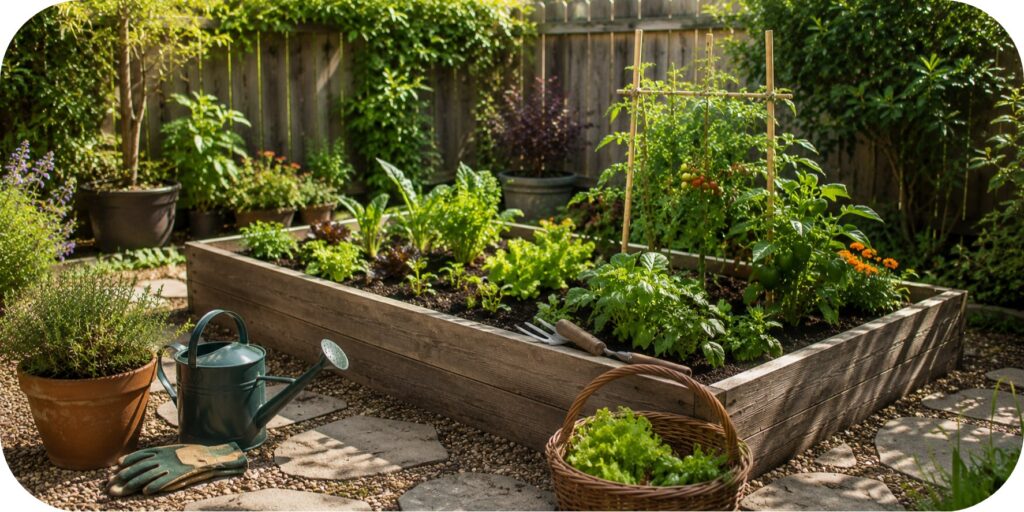
Start With One Raised Planter
A compact raised planter gives you a defined growing area without committing part of your yard permanently to a vegetable bed. Fill it with a few vegetables that suit the season, leaving enough space between plants for them to reach their mature size.
I especially like this approach for beginners because the boundaries are already decided for you. You have one manageable little garden to look after rather than vegetables scattered everywhere.
Grow Tomatoes in Large Containers
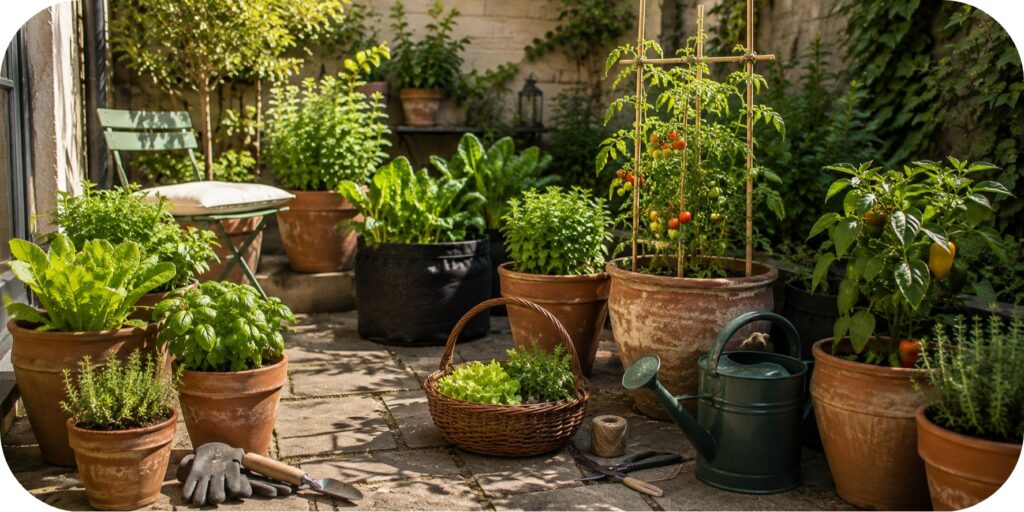
A sunny patio can provide plenty of room for one or two container-grown tomato plants. Choose a generously sized pot with drainage holes and add a sturdy tomato cage or support while the plant is still young.
Place the container where you’ll be able to reach all sides of the plant. That makes watering, tying stems, and eventually picking tomatoes much easier.
Turn Grow Bags Into a Vegetable Corner
Fabric grow bags are useful when you want growing space without adding heavy permanent containers. Group several together against a sunny wall or along the edge of a patio and use them for vegetables suited to container growing.
Mixing two or three sizes can make the arrangement look more like a garden and less like a row of identical containers.
Create a Salad Garden
Instead of trying to grow a little of everything, devote one container or raised planter to salad ingredients. Leaf lettuce, radishes, and other compact crops can create a wonderfully leafy display while giving the garden a clear purpose.
Succession sowing, which simply means planting another small batch after an earlier one, can help keep fresh greens coming rather than having everything ready at once.
Use Height for Climbing Vegetables
A vertical planter or sturdy support lets you use space above the garden instead of relying entirely on the ground. Depending on your growing conditions and the support available, climbing vegetables can add a leafy vertical layer while leaving more room below.
Keep the structure toward the back of the planting area so it doesn’t unnecessarily shade smaller vegetables.
Mix Vegetables With Culinary Herbs
Tuck a few herbs into separate pots around your vegetable containers. Basil, parsley, chives, thyme, and other herbs you regularly cook with can make a small vegetable garden feel fuller without requiring another large growing bed.
Keeping them in individual containers also lets you move them if their light or watering needs differ from your vegetables.
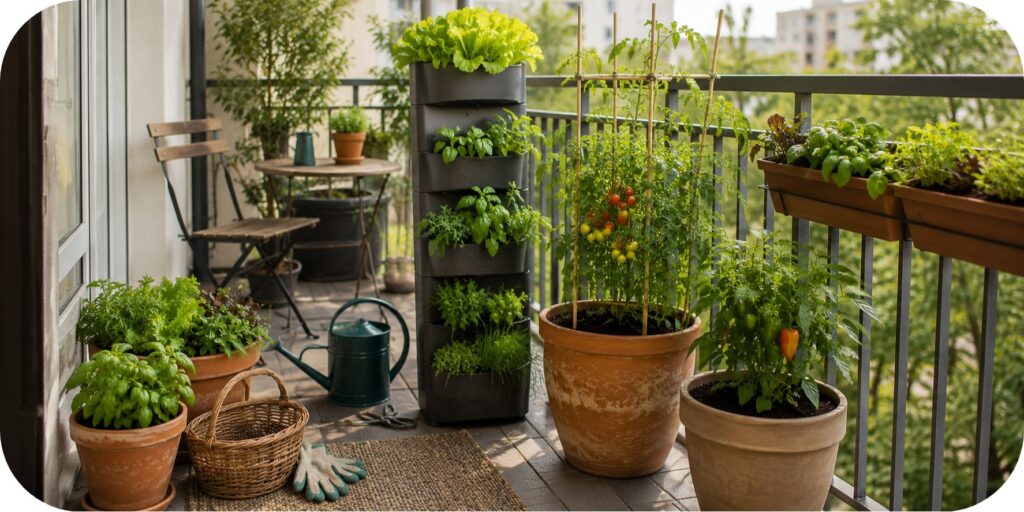
Make a Sunny Balcony Productive
A balcony doesn’t need to hold dozens of pots to become a vegetable garden. A large vegetable container, a compact vertical planter, and a few smaller pots can provide several growing areas while preserving enough floor space to comfortably use the balcony.
Pay particular attention to container weight, drainage, wind exposure, and any building or balcony restrictions before setting up larger planters.
Give One Vegetable the Best Spot
Sometimes the easiest beginner garden is the smallest one. Instead of squeezing six vegetables into an unsuitable space, give your sunniest position to one crop you genuinely want to harvest.
A healthy tomato or pepper plant surrounded by a few pots of herbs can be far more satisfying than an overcrowded collection that’s difficult to maintain.
Why this works: Starting with fewer growing areas makes watering, feeding, and noticing problems much easier, while still giving you the experience of harvesting vegetables you’ve grown yourself.
A Few Helpful Picks
A raised planter with comfortable working height and adequate soil depth can make your first vegetable garden easier to tend.
Large vegetable containers with generous drainage give individual plants more room for healthy roots and help larger vegetables feel anchored in a small-space garden.
Fabric grow bags are useful when you want flexible growing areas that can be rearranged from one season to the next.
Product Suggestions

Click Image To View

Click Image To View
Click Image To View
The Little Details
Keep container materials relatively consistent so the garden doesn’t become visually busy. Terracotta paired with weathered wood, for example, creates a warm and natural foundation even when you’re using several different container sizes.
Give climbing vegetables sturdy support before they need it. Adding a tomato cage or other appropriate support while plants are small is much easier than trying to maneuver one around mature stems later.
Leave a comfortable route to every planter. If you have to lean across several containers to water or harvest something, the arrangement will quickly become frustrating.
Keep your watering can and most-used hand tools somewhere nearby. It sounds like a tiny detail, but making everyday garden jobs convenient makes a small vegetable garden much easier to maintain.
Don’t worry about making everything perfectly symmetrical. Different vegetable heights, leafy shapes, terracotta pots, timber planters, and a little visible soil give the garden much of its character.
Helpful Finds for This Style
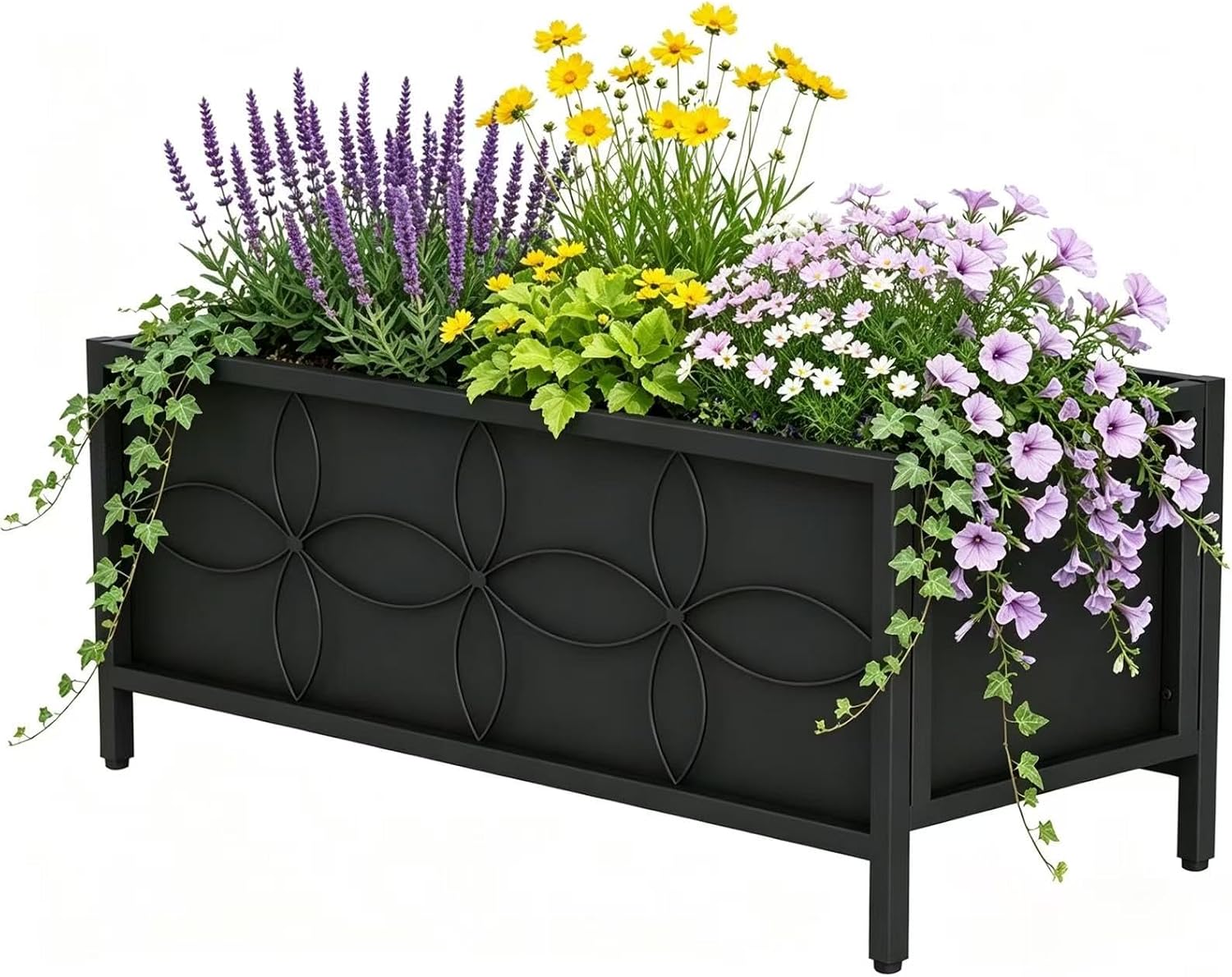
A raised planter creates a contained growing area and is particularly useful when you don’t have an existing garden bed. Look for a sturdy, weather-resistant design with good drainage and enough soil depth for the vegetables you intend to grow.
Fabric grow bags provide flexible growing space for patios and compact backyards. Look for durable breathable fabric, reinforced handles, and sizes appropriate for the crops you’re planting.
Large vegetable containers are useful for giving individual plants plenty of root space. Choose sturdy pots with generous drainage holes and enough volume for the mature plant rather than selecting them based only on how the young seedling looks.
A vertical planter makes use of otherwise empty vertical space. Look for a stable structure with containers large enough for the crops you want to grow and enough separation between levels for light and airflow.
Tomato cages support tall or sprawling plants as they develop. Choose a sturdy size appropriate for the mature variety and put the support in place early so you aren’t forcing it through established roots and stems later.
Vegetable potting mix provides a better container-growing environment than ordinary soil dug from the yard. Look for a quality mix intended for edible container plants with a texture that holds useful moisture while still draining freely.
A compact watering can makes watering closely arranged containers much easier. A narrow spout gives you better control around dense foliage and helps direct water toward the potting mix rather than splashing every leaf.
Gardening hand tools handle the small everyday jobs around containers and raised planters. A comfortable hand trowel and cultivator are usually enough for planting seedlings, refreshing potting mix, and working within confined spaces.
Product Suggestions

Click Image To View

Click Image To View

Click Image To View
Start With One Growing Space
Choose the sunniest practical spot you have and start with just one container, grow bag, or raised planter. Pick a vegetable you’d genuinely enjoy bringing into the kitchen, give it room to grow, and let that first small harvest teach you what you want to plant next.